The scenic way to the roof of Africa.
The Lemosho Route is one of the most scenic and less crowded routes for trekking Mount Kilimanjaro, taking 8 days to complete. It offers a gradual ascent, allowing better acclimatization and increasing the chances of reaching the summit successfully.
- Duration
- 8 Days 7 Nights
- Max altitude
- 5,895 m (19,340 ft)
- Group size
- Up to 21 guests
- Availability
- Jan – Dec
- Best season
- Jan–Feb & Jun–Oct
- Languages
- English, Spanish, French
- Departure & return
- Moshi Town to Lemosho Gate, then back to Kilimanjaro International Airport.
- Departure time
- Please be ready by 8:15 AM for a prompt departure at 9:30 AM.
- Return time
- Approximately 10:30 AM on the last day.
- Dress code
- Casual. Comfortable athletic clothing, hiking shoes, hat, cold weather jacket, gloves, pants, and spare clothing.
- Accommodation
- Two nights Bed & Breakfast at a 3-star hotel (upgrades on request).
- Customizations
- Can be customized upon request to meet your needs.
- Extensions
- Trip extensions are available on request.
What to expect
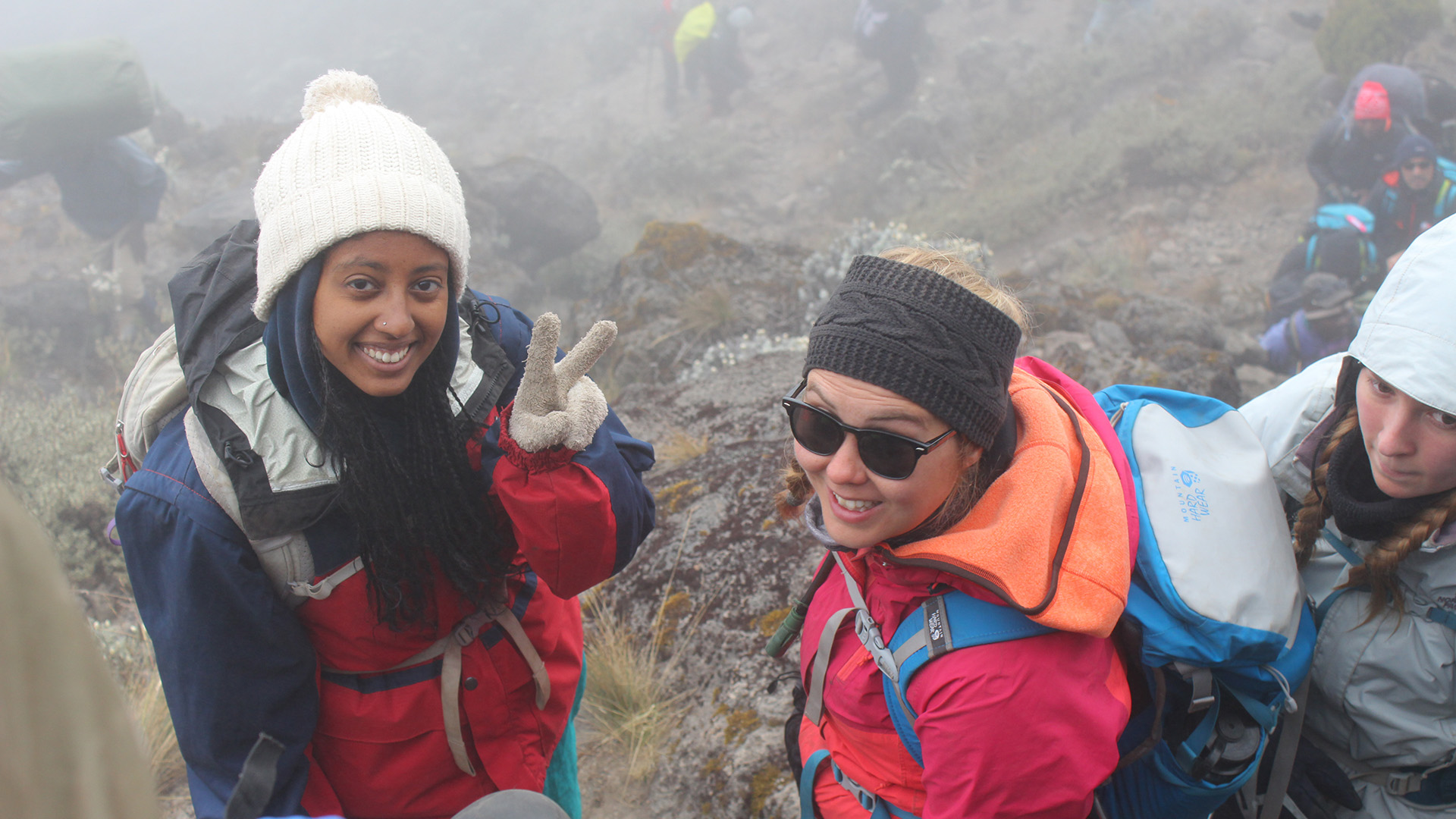
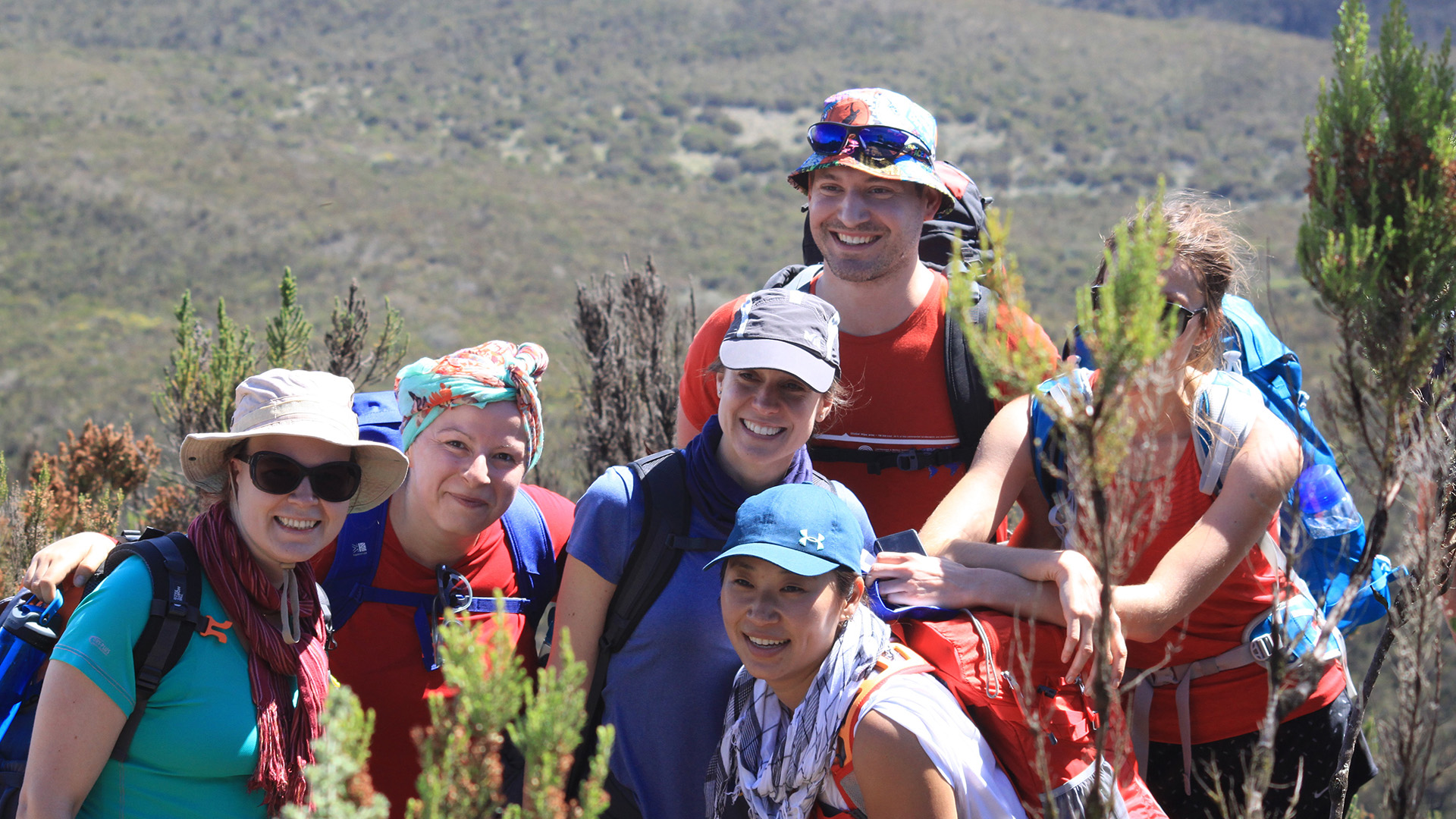
A scenic, less crowded trek through lush rainforest, moorland, alpine desert and glaciers. Expect moderate to challenging daily hikes of 4 to 8 hours, leading to a demanding midnight ascent to Uhuru Peak (5,895 m). Days are warm and nights freezing, so proper layering matters. You sleep in tents with meals prepared by trekking chefs; facilities are basic. The summit push is physically and mentally demanding, but standing on Africa’s highest peak is a truly life-changing reward.
- Stunning scenery & diverse landscapes
- Moderate to challenging trekking
- Cold temperatures & changing weather
- Camping & basic facilities
- Summit night challenge
- Incredible achievement
Your itinerary
Eight trekking days, seven nights camping, plus hotel stays before and after the climb. Elevations, distances and walking times are approximate; your pace and conditions may vary. Elevation change compares the listed heights, not every uphill and downhill stretch.
When you arrive at Kilimanjaro International Airport (JRO), a representative from Bundi Travel will meet you and transfer you to a hotel in Moshi town, with comfortable rooms, hot water, friendly staff, a pool and Wi-Fi. If you arrive at Jomo Kenyatta International Airport (JKIA) in Nairobi instead, we’ll bring you to Moshi by shuttle bus.
In the evening, you’ll meet your guides to get ready for the climb the next day.
- MealsBreakfast & Dinner
Overnight · Hotel in MoshiOne of our partner hotels, confirmed with your itinerary:
Check-in starts at 2:00 PM.
Your guide and mountain crew meet you at the hotel for a briefing before a 3–4 hour drive to the western entrance of Kilimanjaro National Park at Lemosho Gate. After registering and securing climbing permits, you begin the trek to Mti Mkubwa Camp. Raincoats are essential as you traverse the rainforest. On arrival, the crew will have set up tents and prepared lunch.
- Elevation2,100 → 2,780 m
- Distance≈ 6 km
- Hiking time3–5 hours
- HabitatRainforest
- Elevation change+680 m
Sleeping camp · Camping tentsMti Mkubwa Camp · 2,780 m
Cost per person
The more of you climb together, the less each person pays.
Clear, honest pricing
Cost includes
- All transportation in destination location
- Hotel accommodation before and after the trek
- All government taxes and park entrance fees
- Airport arrival and departure transfers
- All meals while on the mountain
- Tented accommodation on Mount Kilimanjaro
- Emergency oxygen cylinders and oximeters
- Complete expedition medical kits
- Comfortable sleeping mats
- All group camping equipment (tents, dining tent, table, chairs, crockery and cutlery)
- Portable radios on every trek
- Dedicated support crew (assistant guides, camp master, porters, chefs)
- Experienced professional mountain guides
- Salaries for the trekking crew
- Medical evacuation with AMREF Flying Doctors
- Purified water while on the mountain
- Portable private flush toilet tent
- Fair and ethical treatment of porters
- Environment-friendly trek
Cost excludes
- Personal gear rentals
- Tanzania visa fee
- Tipping for the trekking crew
- Travel insurance
- Any private expenses
The route at a glance
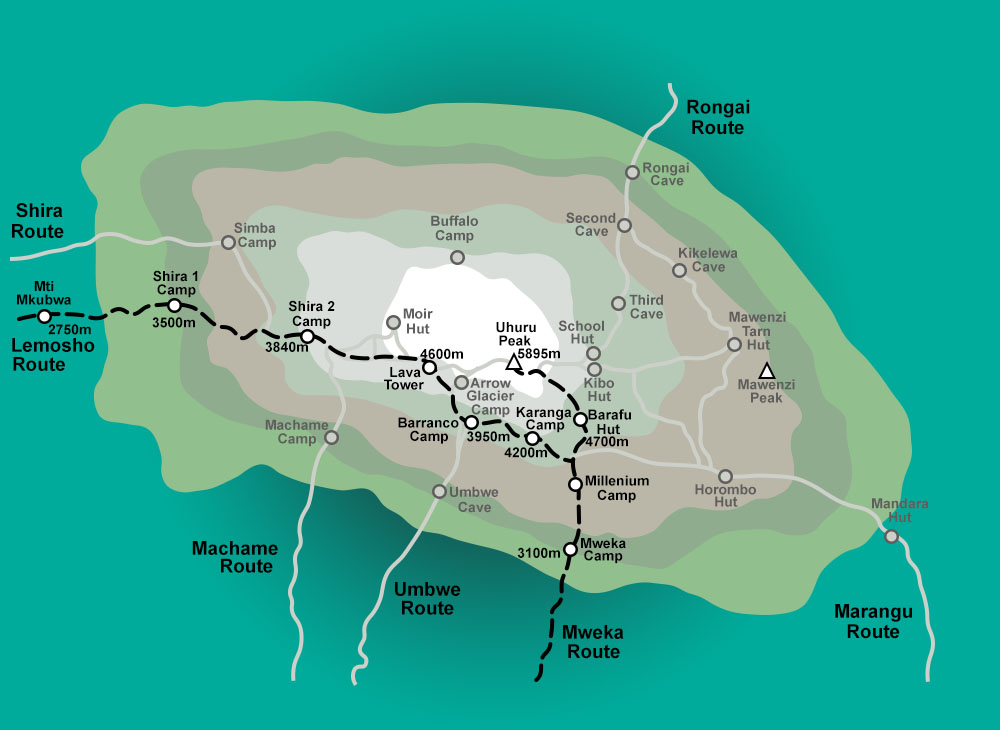
Elevation profile
Elevation at each route stop · stages equally spaced, not distance-scaled.
Two hotel nights in Moshi
Before and after your climb, stay two nights with breakfast or half board at one of our hand-picked partner hotels:
- Ameg LodgeVisit website
- Shose Farmhouse and ChaletsVisit website
- Kaliwa LodgeVisit website
- Brubru LodgeVisit website
On the mountain you sleep in tents set up by our crew, with sleeping mats, a dining tent and a private toilet tent.
Good to know
When is the ideal period to climb Kilimanjaro?
Although Mount Kilimanjaro is accessible year-round, most climbers opt for the dry seasons — from December through March and from June to October. Many believe that January, February and September offer the most favorable conditions for an ascent.
What are the Kilimanjaro accommodations like?
Each day, expert camp porters set up and take down your mountain camps. You’ll sleep in durable, double-occupancy all-weather tents with full-ground pads to keep you and your belongings dry. Every camp has private toilet tents, solar-lit dining tents with tables and chairs, and basins of hot water for washing.
How long are the treks?
Kilimanjaro treks typically range from five to eight days. To prioritize acclimatization and increase summit success, we generally recommend a minimum of six days. Custom itineraries with longer durations are also available. The total trekking distance ranges from approximately 53 to 73 km depending on the route; adding extra days significantly aids acclimatization. For instance, while the Marangu route is often completed in five days, we extend it to six for a safer and more comfortable experience.
Who are your operators in Tanzania?
We are. We are not agents for anybody — we run the treks ourselves through our own registered Tanzanian local company.
Can I get an itinerary for the trek?
You will receive an exact itinerary when you send us an inquiry. Detailed day-by-day descriptions and route maps of each trail are included in the itinerary document, which you receive for free when you book a trek through us.
Will I see wildlife?
Prior to the climb, you’ll enjoy an acclimatization day with wildlife viewing and nature walks. Trekking through the rainforest, you’re likely to spot black-and-white colobus monkeys, tropical birds and more.
Who is leading the trek?
Treks are led by local guides hand-picked for their knowledge, expertise and experience on the mountain. We employ only guides who demonstrate excellent knowledge of the mountain, first-rate safety records, brilliant leadership skills and wonderful care for every climber, so your trek is safe and enjoyable.
What is the maximum number of people on the trek?
The maximum number of people on the trek is eight. Occasionally this may stretch to nine or ten — for example, if six people are already booked and a group of four wants to join. When this happens, we contact those already booked to check they have no objection.
My group is larger than ten, is this a problem?
We aim to keep public groups small. If you are a single, private group, there is no problem accommodating you whatever the size, as you’ll know before arriving in Tanzania how many people you’ll be trekking with.
What is included in the price, and what isn’t?
See the “Cost includes” and “Cost excludes” lists above for the full breakdown.
What currencies do you accept as payment?
Our prices are quoted in US dollars, the standard currency for most of our operating costs. We’re happy to accept other currencies too, including British pounds (GBP), euros (EUR), Canadian dollars (CAD), Australian dollars (AUD) and more — just let us know.
How many days before the start of the climb should I arrive in Tanzania?
We advise spending at least one full day in Tanzania before beginning your trek. Arriving by plane one day and climbing the next is not the best way to begin.
Can children climb Kilimanjaro?
The minimum age set by Kilimanjaro National Park for children trekking to Uhuru Peak is 10 years old.
How many guides will we have?
For 2–3 climbers: one lead guide and one assistant guide. For 4–6 climbers: one lead guide and 2 assistant guides. For 7–8 climbers: one lead guide and 3 assistant guides. For 9–10 climbers: one lead guide and 4 assistant guides.
What travel documents do I need?
You need a passport valid at least six months beyond your travel dates, with an entry or re-entry visa, duly endorsed.
Are there charging stations on Mount Kilimanjaro?
There are no charging stations on the mountain. We recommend bringing a portable solar panel and power banks charged with enough power to last the entire trip, plus spare batteries.
Do we tip the hiking crew?
Yes, it is expected and much appreciated. The amount depends on the number of days, but typically ranges from $150 to $300 per hiker. Tips are pooled and shared among the crew. Bring US dollar bills.
What kind of experience do I need?
None, but previous hiking or climbing experience helps. You need to be fit and healthy with a good pair of worn-in hiking boots. The fitter you are, the more you are likely to enjoy it.
What kind of food will I eat?
Highly trained chefs prepare three hot, nutritious meals daily, plus trail snacks and afternoon tea, served in a solar-lit dining tent with your fellow trekkers and head guide. Vegetarian, vegan, gluten-free, lactose-free, dairy-free, allergen-free, diabetic-friendly, low-carb/keto, low-sodium, halal, kosher, Jain, Seventh-day Adventist, Rastafarian (Ital), pescatarian, flexitarian and other specialty meals can be provided with advance request. We’re happy to send a sample menu — just ask!
How many hours will I trek each day?
It depends on the route and day. Typical trekking days are 4–7 hours. Summit day is the most challenging, often 10–15 hours including the ascent and initial descent. Some descent days can reach 8–10 hours. Actual times vary with your pace, the weather and the route.
Do you offer private and fully customizable climbs?
Your Kilimanjaro climb is entirely yours to design. You go with the people you choose, leave on whatever day you wish, and decide your preferred route, pace and number of days.
Book with confidence
- Middle-man free pricing
- Support available 24/7
- Carefully selected tours
- 100% customizable
- Local knowledge
- Safety and trust
Need help?
 KendraOnlineNeed help? Chat with us
Do not hesitate to give us a call. We are an expert team and we are happy to talk to you.
+255 761 080 201info@bunditravel.com